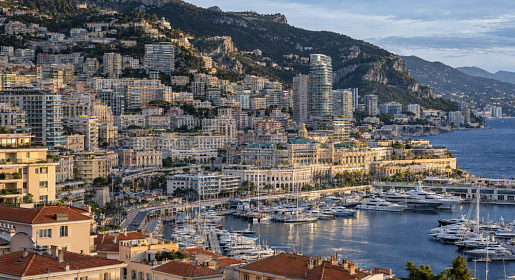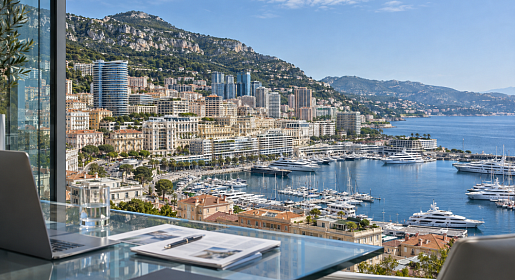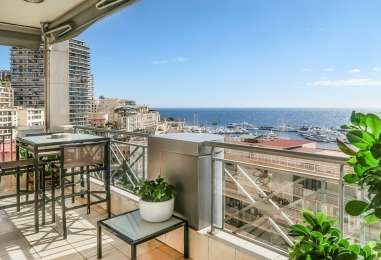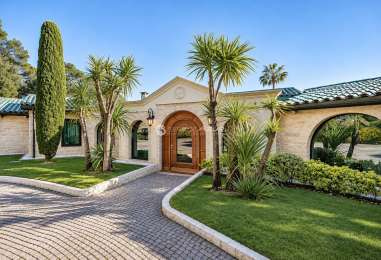
Moving to Monaco is not simply a property decision.
For foreign nationals planning to live in the Principality for more than three months, residency involves a separate administrative procedure covering accommodation, financial resources, identity and, depending on nationality, preliminary immigration formalities.
Property ownership can form an important part of the relocation plan, but buying an apartment or villa in Monaco does not automatically create resident status.
Who Needs a Monaco Residence Permit?
Under Monaco’s official rules, a foreign national aged 16 or over who intends to reside in the Principality for more than three months must hold a Monaco residence permit, or carte de séjour.
The precise procedure depends on nationality, family circumstances, professional situation and the applicant’s relocation plans.
One of the most important distinctions is between applicants from the European Economic Area and those from other countries.
EEA, Swiss and Andorran Nationals
Nationals of the European Economic Area, as well as Swiss and Andorran nationals, can begin their Monaco residence procedure with a valid national identity card or passport.
They do not generally need to obtain a French long-stay establishment visa before applying in Monaco.
They must nevertheless complete the Monaco residence process and provide the required evidence relating to accommodation, resources and their individual circumstances.
What About Applicants from Other Countries?
For nationals from outside the European Economic Area, the process generally begins before the Monaco residence-permit application itself.
Applicants wishing to settle in Monaco must normally apply for a long-stay visa for Monaco through the relevant French embassy or consulate in their country of residence.
The application is handled through the French visa system and transmitted to the Monegasque authorities for consideration.
A separate transfer-of-residence procedure can apply in certain circumstances to non-EEA nationals who are already legally established in France.
It is therefore important to identify the correct route according to both nationality and current country of residence before setting a relocation timetable.
How Is Accommodation in Monaco Demonstrated?
An applicant needs to establish a place of residence in the Principality.
Official Monaco guidance identifies two of the most common forms of evidence:
- a registered Monaco residential lease;
- a property ownership deed in the Principality.
This means that property ownership is not a prerequisite for Monaco residency. Renting can also provide the necessary accommodation basis.
From a practical perspective, the property should also correspond to the way the applicant and household intend to live.
An apartment that works well as an occasional pied-à-terre may not necessarily be the most suitable long-term home for a family relocating to Monaco full-time.
Consider the Household When Choosing the Property
Where a relocation involves a spouse, children or other family members, it is useful to define residential requirements before beginning viewings.
In addition to bedroom count, long-term residents may need to consider:
- parking;
- storage;
- concierge and building services;
- access to schools;
- proximity to work;
- daily movement around the Principality;
- access to public transport and Monaco’s public lifts and pedestrian connections.
This helps distinguish a property that is attractive as an investment from one that genuinely supports the intended lifestyle.
What Financial Resources Must Be Demonstrated?
Applicants must show that they have sufficient income and/or financial resources to live in Monaco.
The evidence depends on the individual profile.
Relevant sources may include:
- employment income;
- business activity;
- pension income;
- investment income;
- bank assets and other documented financial resources.
Applicants should not assume that there is one universal bank-deposit amount or one standard bank letter applicable to every residence application.
The official requirement is to demonstrate sufficient resources, while the supporting evidence depends on the applicant’s circumstances and relocation project.
Does a Monaco Bank Account Form Part of the Process?
For some international applicants, establishing a Monaco banking relationship becomes part of the relocation process, particularly where financial resources are demonstrated through bank assets.
Opening an account does not, however, replace the residence application.
A bank carries out its own client, source-of-funds and compliance review, while the Monegasque authorities separately assess the residence-permit application.
The two processes may need to be coordinated, but they should not be treated as the same procedure.
Which Documents May Be Required?
The exact documentation depends on nationality and the applicant’s circumstances.
The process can involve evidence relating to:
- identity and nationality;
- civil and family status;
- accommodation in Monaco;
- income and financial resources;
- employment or business activity;
- the applicant’s personal and administrative history.
For applicants who are subject to the French long-stay visa procedure for Monaco, France-Visas specifically lists documents including a birth certificate, marriage or divorce documents where applicable and criminal-record certificates from the relevant countries of residence.
Depending on the country of issue, foreign documents may require translation, legalisation or an apostille.
It is therefore sensible to begin collecting documentation well before the intended move rather than waiting until a property has been selected.
Is the Applicant’s Background Reviewed?
Yes. The Monaco residence procedure includes declarations relating to criminal convictions and any current involvement with judicial or police authorities.
The official residence application documentation contains a declaration covering these matters.
Applicants going through the preliminary long-stay visa procedure may also be required to provide official criminal-record certificates.
Where an applicant’s circumstances are unusual or span several jurisdictions, the document requirements should be checked early.
Property Purchase and Residency Are Separate Processes
If a client plans both to purchase property and relocate to Monaco, the two projects should ideally be coordinated from the outset.
Legally and administratively, however, they remain separate.
Buying an apartment can establish the accommodation element, but it does not replace the assessment of financial resources, identity and immigration status.
Equally, ownership is not mandatory for residency, because a registered rental arrangement can also provide evidence of accommodation.
Choose the Property for the Intended Lifestyle
A relocation purchase should often be assessed differently from a purely investment-led acquisition.
Daily routes to school or work, parking, building services, proximity to shops and the practical movement between Monaco’s different levels can all become important.
Monte-Carlo, Larvotto, La Rousse, Fontvieille, La Condamine and Jardin Exotique offer different residential environments and day-to-day experiences.
For an introduction to these areas, see the Monaco ServiceAzur district guide.
Can Renting First Be a Good Strategy?
Buying is not the only way to establish accommodation in Monaco.
For some international clients, renting first can be a practical approach.
It provides time to experience daily life in the Principality, understand how the districts differ and determine which type of property is best suited to a permanent residence.
For other clients, purchasing from the beginning may make more sense, particularly when long-term plans and property requirements are already clear.
The right choice depends on timing, family needs, financial planning and the availability of suitable properties.
How Should a Relocation Be Planned?
In practice, it is useful to treat relocation as several coordinated workstreams:
- identify the immigration procedure applicable to the applicant’s nationality;
- begin gathering documents;
- determine how financial resources will be demonstrated;
- decide between purchasing and renting accommodation;
- select a property suited to the household and daily lifestyle;
- coordinate property, lease and administrative timelines.
This reduces the risk of choosing a property that works well as an investment but is poorly adapted to the practical requirements of the move.
Monaco Residency
The exact documents and sequence of steps depend on the applicant’s nationality, family situation and professional circumstances.
Requirements should therefore always be checked for the applicant’s specific profile before the move is finalised.
For a broader overview, see the Monaco ServiceAzur residency guide.
Properties for Sale in Monaco
Where relocation includes a property acquisition, the search can be coordinated with the residence process so that the property is assessed not only as an asset, but also as a practical long-term home.